
 Pin It
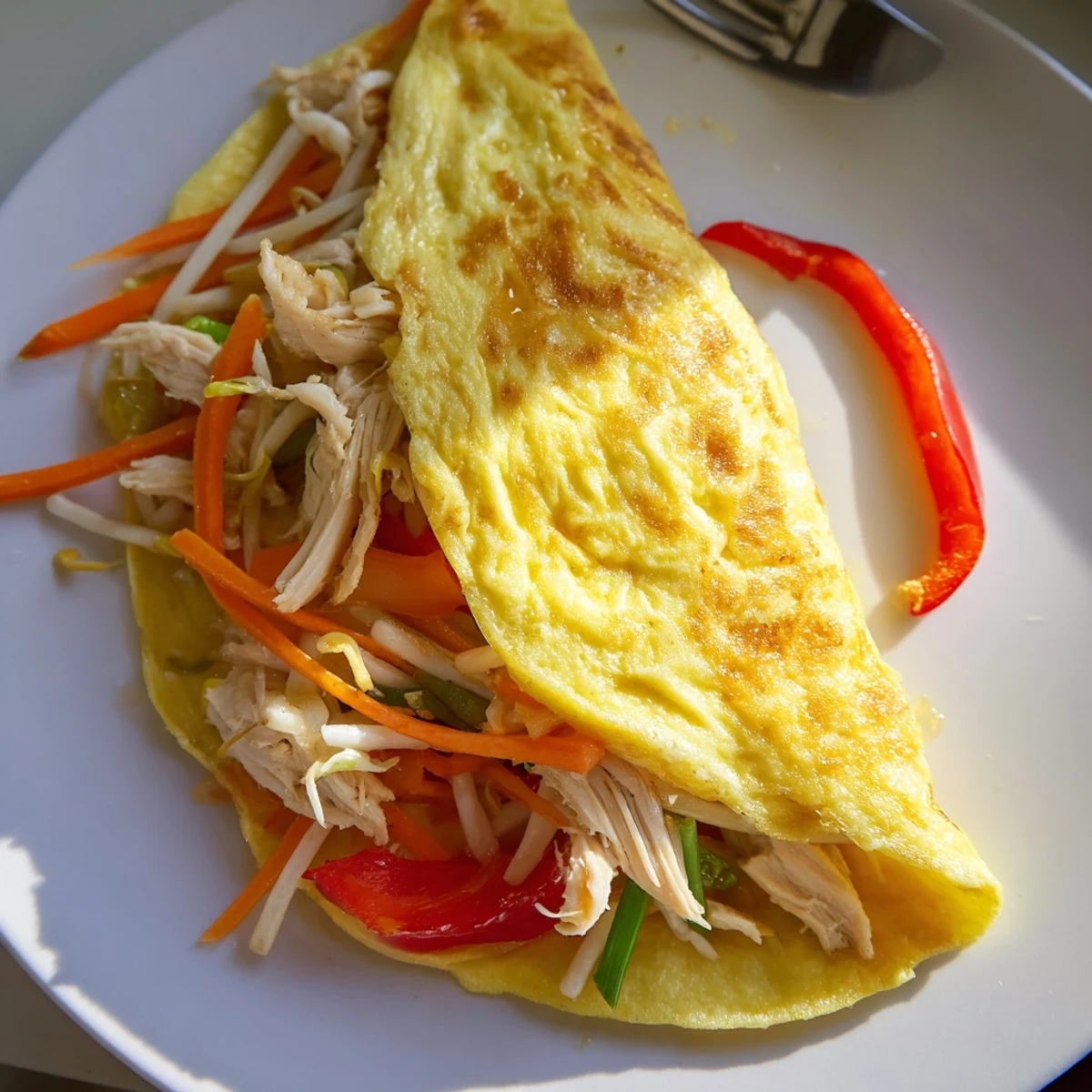
 This Chinese omelette brings together fluffy beaten eggs with a vibrant stir-fried filling of julienned carrot, bell pepper, spring onions, and bean sprouts.
Tender shredded chicken adds protein, while soy sauce, sesame oil, and white pepper deliver authentic Chinese flavor.
Ready in just 20 minutes, it makes a satisfying meal for breakfast, lunch, or a light dinner. Easily adaptable with shrimp or tofu for different dietary preferences.
The wok was still crackling from breakfast when my roommate walked in, hungover and muttering something about needing real food. I had leftover shredded chicken from the night before and a sad looking half bell pepper in the crisper drawer. Twenty minutes later we were both hunched over the counter, fork fighting over the last slippery fold of this omelette, and I knew it was going into permanent rotation.
I started making this on Sunday evenings when cooking a full meal felt like too much effort but toast felt like giving up. The sizzle of vegetables hitting hot oil became my favorite sound, a small reward for surviving the week. My partner now requests it by name, which is really just him saying omelette thing with enough enthusiasm that I know what he means.
Ingredients
- 4 large eggs: The foundation of everything, so use the freshest you can find for the fluffiest result.
- 100 g cooked chicken breast, shredded: Optional but worth it for turning breakfast into a real meal.
- 1 small carrot, julienned: Thin strips cook fast and add a sweetness that balances the soy sauce.
- 2 spring onions, finely sliced: They bring a mild bite and a pop of green that makes everything look intentional.
- 1/2 red bell pepper, thinly sliced: Color and crunch, the two things that make this feel like more than just eggs.
- 50 g bean sprouts: They cook in seconds and add a watery crispness that keeps the filling lively.
- 2 tbsp soy sauce: Use tamari or gluten free soy sauce if needed, and split it between the eggs and the pan.
- 1 tsp sesame oil: A little goes a long way and gives that unmistakable Chinese restaurant aroma.
- 1/4 tsp white pepper: Subtler than black pepper, it adds warmth without distracting from the other flavors.
- 2 tbsp vegetable oil: Split between cooking the vegetables and cooking the eggs so nothing sticks.
Instructions
- Beat the eggs with authority:
- Crack all four eggs into a mixing bowl and pour in the soy sauce, sesame oil, and white pepper. Whisk aggressively until the mixture looks uniform and a little frothy on top, about 30 seconds of determined stirring.
- Get the pan hot:
- Set a non stick frying pan over medium high heat and add one tablespoon of vegetable oil. Wait until you see the oil shimmer and faint wisps of smoke before moving on.
- Toss the vegetables:
- Add the julienned carrot, sliced bell pepper, spring onions, and bean sprouts all at once. Stir fry for 2 to 3 minutes, keeping everything moving so they soften slightly but keep their crunch.
- Warm the chicken through:
- Toss in the shredded chicken and stir for about a minute just to heat it. Scoop everything out of the pan and onto a plate nearby.
- Pour and spread the eggs:
- Add the remaining oil to the pan and pour in the beaten eggs, tilting the pan gently so the liquid covers the entire surface evenly.
- Lift and let flow:
- As the edges start to set, use a spatula to gently lift them, tilting the pan so runny egg slips underneath and cooks against the hot surface.
- Fill and fold:
- When the omelette is mostly set but still a touch glossy on top, scatter the vegetable and chicken mixture over one half. Flip the other half over like a blanket and let it cook for one more minute.
- Slide and serve:
- Gently slide the omelette onto a warm plate and serve immediately while the edges are still slightly crisp and the inside is steamy.
 Pin It
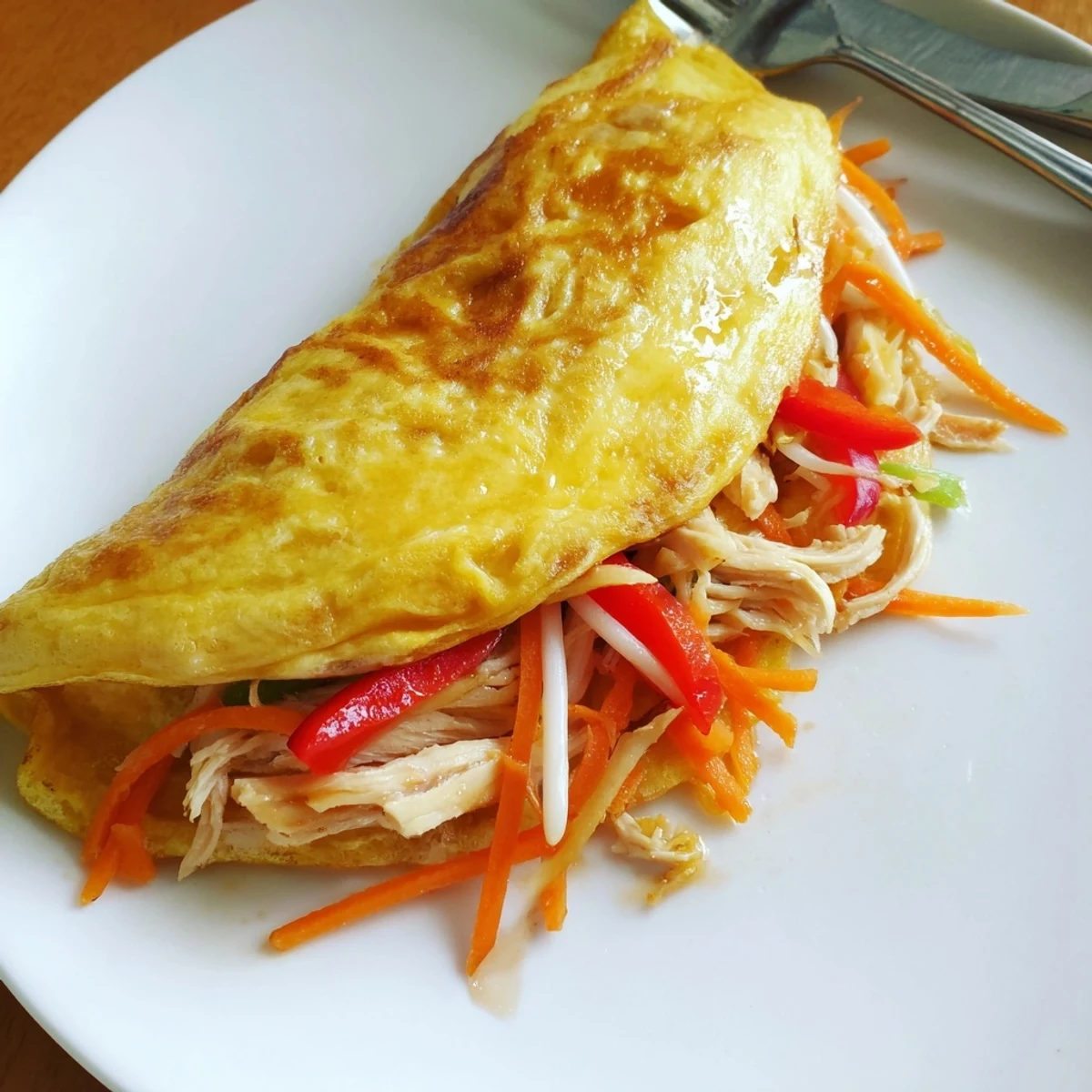
 There is something deeply satisfying about folding an omelette in half and watching the filling peek out from the edges like it wants to be seen. It turns a handful of scraps into something that looks plated and purposeful.
Making It Your Own
Swap the chicken for cooked shrimp if you want something lighter, or press extra firm tofu into cubes for a vegetarian version that still has substance. A drizzle of chili oil across the top changes the whole personality of the dish without any extra work. I sometimes add a handful of torn cilantro at the end when I have it, though purists might side eye that choice.
What to Serve Alongside
This omelette is hearty enough on its own but truly shines next to a small bowl of jasmine rice to soak up any soy sauce that escapes. A quick dipping sauce made from equal parts soy sauce and rice vinegar with a pinch of sugar pulls everything together. On lazy nights I just eat it standing at the counter with a cold drink and call it dinner.
Storage and Reheating
Leftovers keep well in the refrigerator for up to two days, though the bean sprouts will lose some of their crunch overnight.
- Reheat gently in a pan over low heat to avoid turning the eggs rubbery.
- A microwave works in a pinch at 30 second intervals, but cover it loosely to trap steam.
- The omelette is best eaten fresh, so only make as much as you plan to finish.
 Pin It
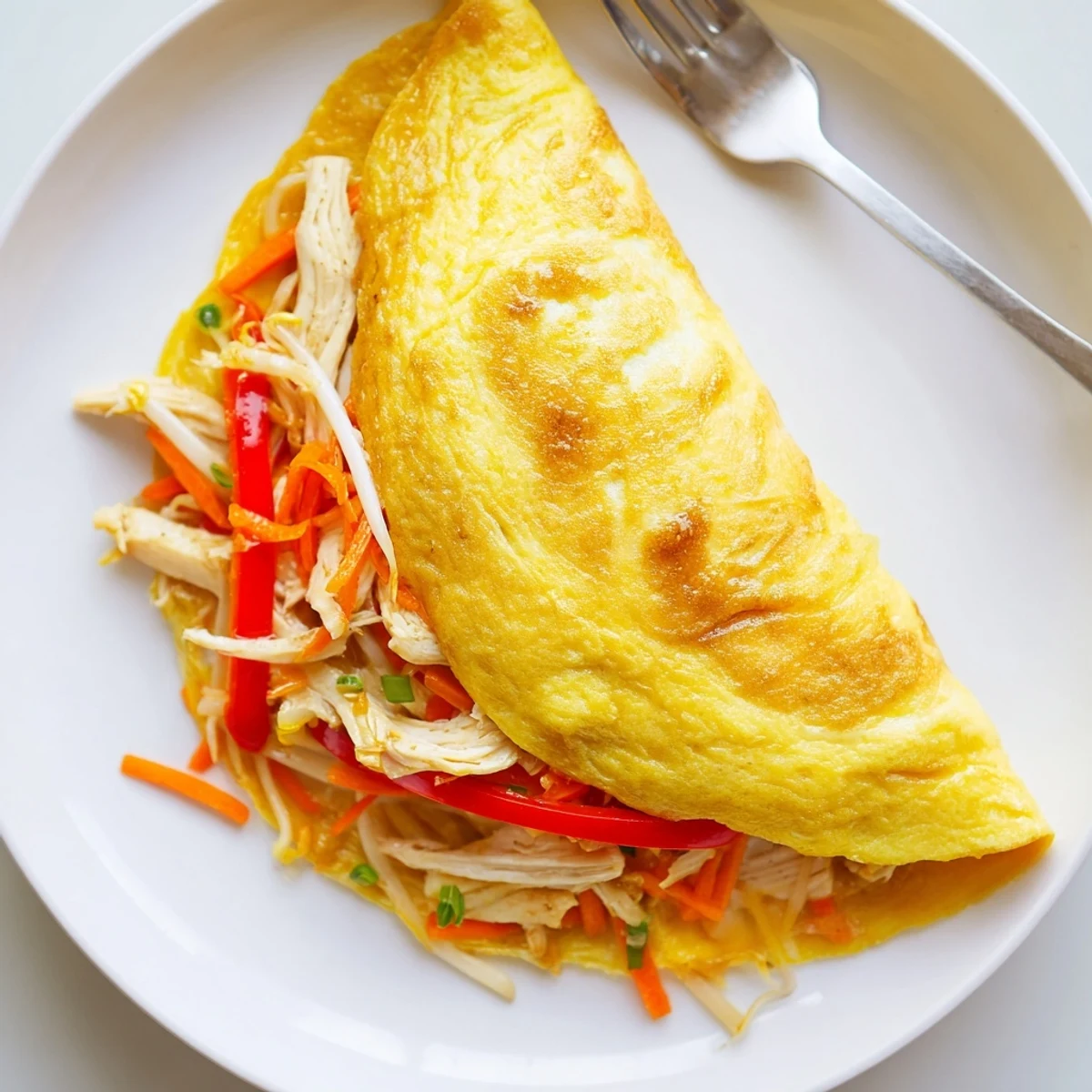
 Keep this recipe in your back pocket for any night when you want something warm and satisfying without turning on the oven or dirtying every dish you own.
Common Questions
- → Can I make this Chinese omelette ahead of time?
-
It's best served fresh off the pan while the eggs are still fluffy and the vegetables retain their crunch. However, you can prep the vegetables and chicken in advance to speed up cooking when ready.
- → What can I substitute for chicken in this omelette?
-
Cooked shrimp works beautifully for a seafood version, and firm tofu cubes are a great vegetarian alternative. Both pair well with the Chinese seasonings and vegetables.
- → How do I keep the omelette from sticking to the pan?
-
Use a good quality non-stick frying pan and make sure the oil is hot before pouring in the beaten eggs. Gently lifting the edges with a spatula as it cooks also helps prevent sticking.
- → Is this Chinese omelette gluten-free?
-
Yes, as long as you use gluten-free soy sauce or tamari. All other ingredients are naturally gluten-free, making it an easy adaptation for those avoiding gluten.
- → What should I serve with this omelette?
-
It pairs wonderfully with steamed jasmine rice and a light soy dipping sauce. A simple cucumber salad or miso soup also makes a great side for a more complete meal.
- → Can I add more vegetables to the filling?
-
Absolutely. Mushrooms, cabbage, snow peas, and bok choy all work well. Just keep the total amount of filling manageable so the omelette folds without breaking.