
 Pin It
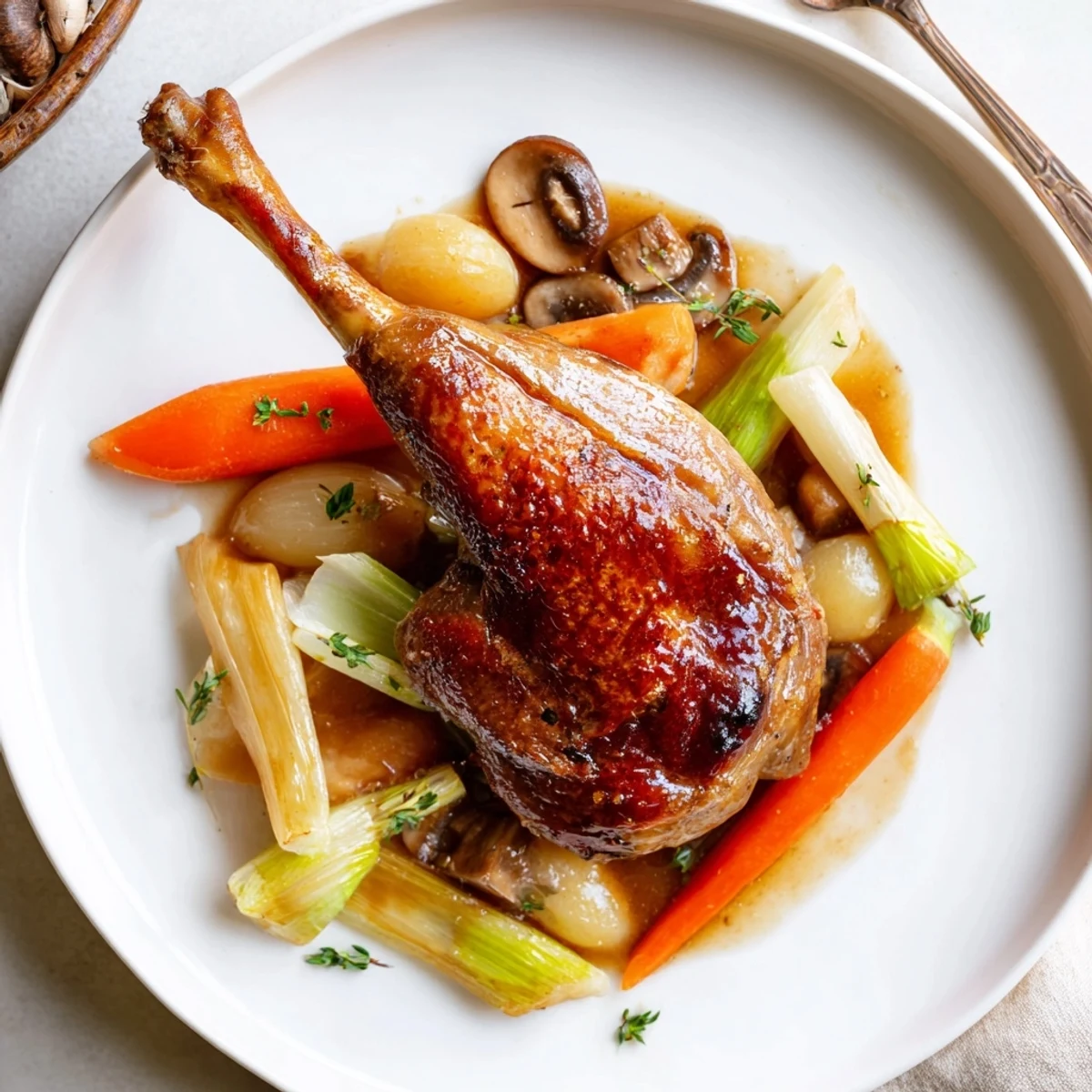
 Begin by patting duck dry, seasoning, and searing skin-side down until fat renders and skin browns. Sauté shallot, garlic and leeks in reserved fat, add root vegetables and mushrooms, then deglaze with dry white wine. Add stock, soy, honey and herbs, nestle duck atop vegetables and braise until tender. Finish in a hot oven brushed with neutral oil to crisp skin, rest briefly and serve with braising jus spooned around.
The kitchen smelled like a Parisian bistro the evening I decided to braise a whole duck for the first time. Rain was tapping against the window and I had a bottle of white wine open half for cooking and half for courage. The duck sat on my counter, plump and slightly intimidating, but I was determined to turn it into something that would make my dinner guests forget about the storm outside. That night changed how I think about cooking duck forever.
My friend Marc, who swears he does not like duck, went back for thirds that night and now asks me to make this every autumn without fail.
Ingredients
- Whole duck (about 2 kg), cut into 4 pieces: Ask your butcher to cut it for you if you are not comfortable with a cleaver at home.
- Kosher salt and black pepper: Season generously because duck can handle and actually needs bold seasoning.
- Dry white wine: Something you would drink on its own, nothing overly sweet or oaky.
- Chicken stock: Low sodium gives you more control over the final salt level of the braise.
- Soy sauce (gluten-free if needed): Adds umami depth that ties everything together beautifully.
- Honey: Just enough to round out the savory notes and help with browning.
- Bay leaves and fresh thyme: Fresh thyme makes a noticeable difference here, dried works but is less vibrant.
- Garlic and shallot: Smashed garlic cloves release their flavor slowly into the braise.
- Carrots, parsnips, and potatoes: Cut them thick so they hold their shape during the long cook.
- Leek and button mushrooms: These soak up the braising liquid like little sponges and become incredibly flavorful.
- Neutral oil for crisping: A light coating on the skin helps it blister and turn golden in the final roast.
Instructions
- Preheat and prepare:
- Set your oven to 170 degrees Celsius (340 degrees Fahrenheit) and pat every duck piece bone dry with paper towels. Season all over with salt and pepper, being sure to get underneath the pieces as well.
- Sear the duck:
- Place duck skin side down in a cold Dutch oven, then turn the heat to medium. Let it render and brown undisturbed for 5 to 7 minutes until the skin is deeply golden and a good amount of fat has pooled. Flip and brown the other side for 2 to 3 minutes, then remove the duck and set it aside.
- Build the flavor base:
- Pour off all but 2 tablespoons of the rendered duck fat. Toss in the shallots, garlic, and leeks, stirring until everything is fragrant and softened, about 3 minutes.
- Add the vegetables:
- Dump in the carrots, parsnips, potatoes, and mushrooms. Stir them around for 2 to 3 minutes so every piece gets coated in that flavorful fat.
- Deglaze and create the braise:
- Pour in the white wine and scrape up every browned bit stuck to the bottom because that is pure flavor. Add the chicken stock, soy sauce, honey, bay leaves, and thyme, then stir to combine everything.
- Nestle and simmer:
- Place the browned duck pieces on top of the vegetables skin side up so the skin stays above the liquid. Bring it to a simmer on the stovetop, then cover with a tight fitting lid.
- Braise low and slow:
- Transfer the whole pot to the oven and let it braise for 1 hour and 30 minutes. Your kitchen will start smelling incredible around the 45 minute mark.
- Crisp the skin:
- Remove the lid, crank the oven up to 220 degrees Celsius (425 degrees Fahrenheit), and brush the duck skin with a thin layer of neutral oil. Roast uncovered for 15 to 20 minutes until the skin is crisp, blistered, and a deep amber color.
- Rest and serve:
- Pull it from the oven and let everything rest for 5 minutes. Discard the bay leaves and thyme stems, then serve the duck over the vegetables with braising juices spooned generously around.
 Pin It
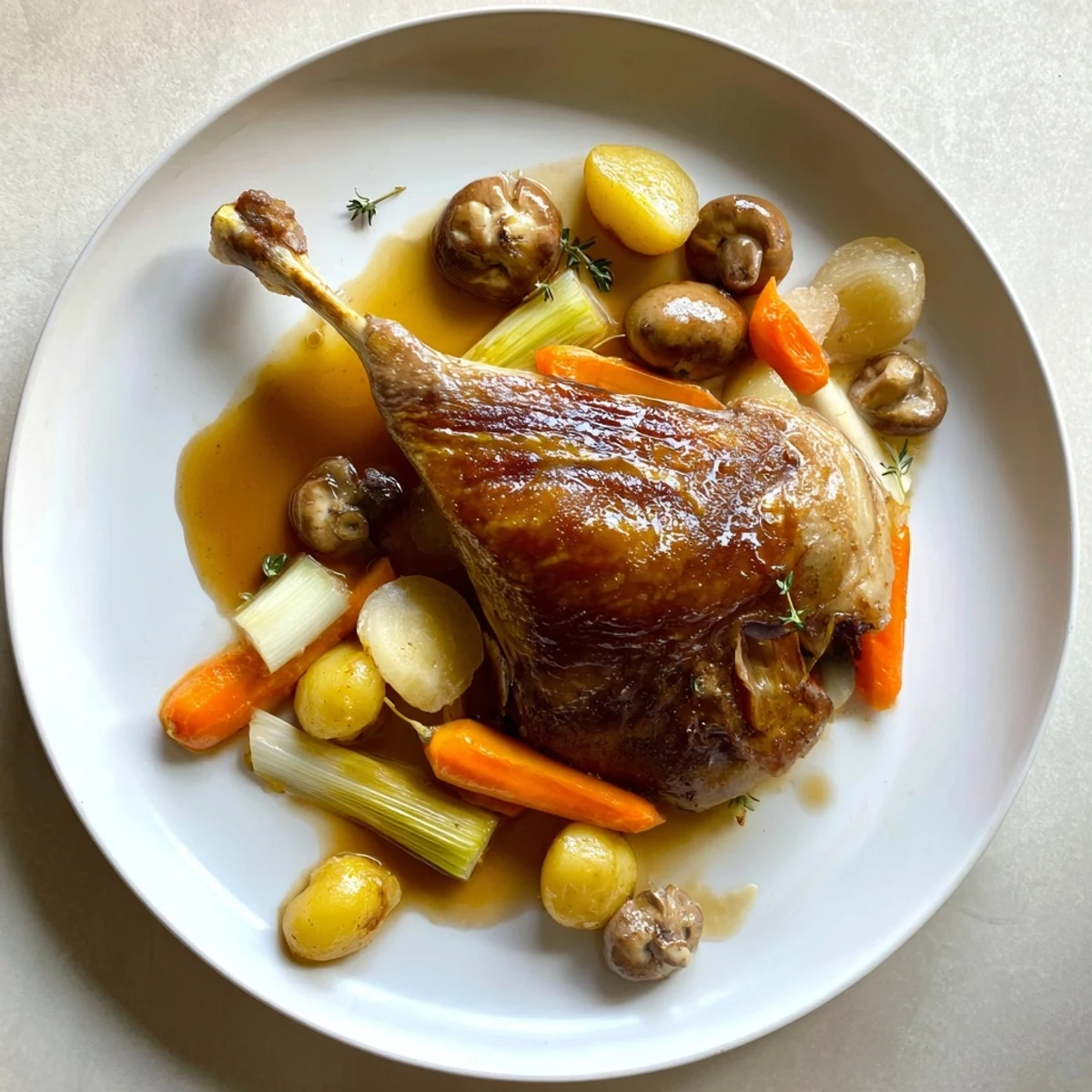
 There is something deeply satisfying about lifting the lid after an hour and a half and seeing the duck practically falling off the bone atop a bed of glossy, wine stained vegetables.
What to Serve Alongside
A crusty baguette is essential for soaking up every last drop of braising juice, and a simple bitter green salad with a lemon vinaigrette cuts through the richness perfectly. Pour a Pinot Noir or a chilled Beaujolais and you have a meal that rivals any restaurant.
Seasonal Swaps and Substitutions
In winter I swap parsnips for celery root and add a handful of pearl onions. During spring, baby turnips and fresh peas work beautifully in place of the heavier root vegetables. The braise is forgiving so follow your instincts and whatever looks good at the market.
Storage and Reheating
Leftovers keep beautifully in the refrigerator for up to three days and the flavor actually improves overnight as everything melds together. Reheat gently in a covered pot at a low temperature so the duck does not dry out.
- Store the duck and vegetables together in their braising liquid to keep everything moist.
- A splash of balsamic vinegar stirred in at the end adds a wonderful depth.
- Always check your soy sauce and stock labels for hidden gluten if cooking for someone sensitive.
 Pin It
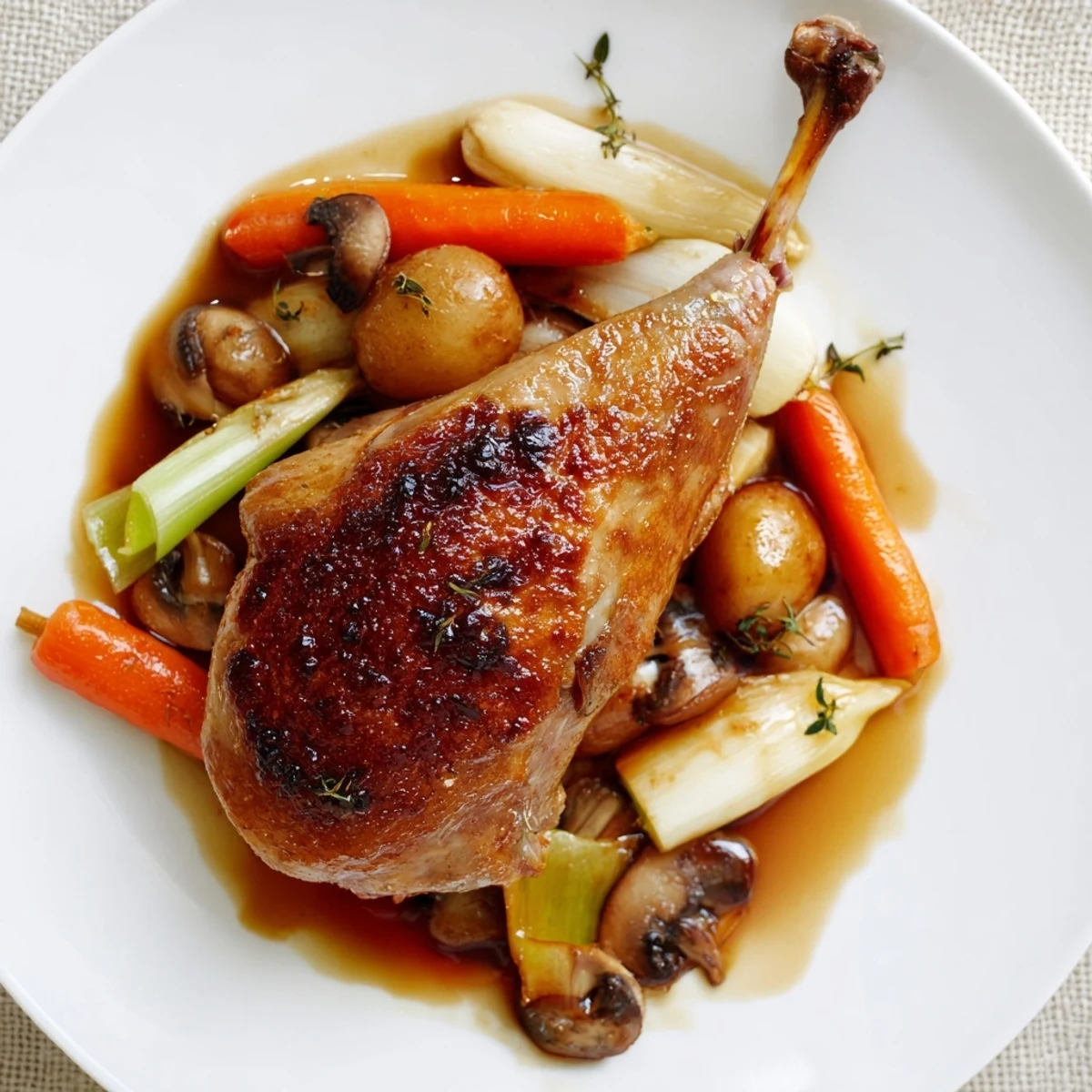
 This dish has a way of turning an ordinary evening into an occasion worth remembering. Share it with people who appreciate the quiet magic of a kitchen filled with warmth and incredible smells.
Common Questions
- → How do I ensure a crisp, golden skin?
-
Pat the skin thoroughly dry, render excess fat by searing skin-side down until well browned, then finish at high oven heat brushed with a neutral oil. Rest briefly before serving to let juices redistribute and maintain crispness.
- → Can components be cooked ahead of time?
-
Yes. Braise the duck and vegetables until tender, cool, and refrigerate. Reheat gently in the oven, then finish under high heat to restore a crisp skin just before serving.
- → Which vegetables work best with this method?
-
Sturdy root vegetables like carrots, parsnips, potatoes and leeks hold up well to long braising. Mushrooms add earthiness; swap seasonal roots such as turnips or celery root for variety.
- → What can I use instead of dry white wine?
-
Substitute an equal amount of low-sodium chicken stock with a splash of apple cider or dry vermouth for acidity. For deeper sweetness, a touch of balsamic can be added to the braising liquid.
- → How do I tell when the duck is done and tender?
-
The meat should yield easily to a fork and pull away from the bone with little resistance. After braising, test a thick piece near the bone; it should be soft and easy to shred.
- → How can I keep this gluten-free?
-
Use tamari or a certified gluten-free soy sauce and check that the chicken stock and any packaged ingredients are labeled gluten-free to avoid hidden gluten in the braising liquid.