
 Pin It
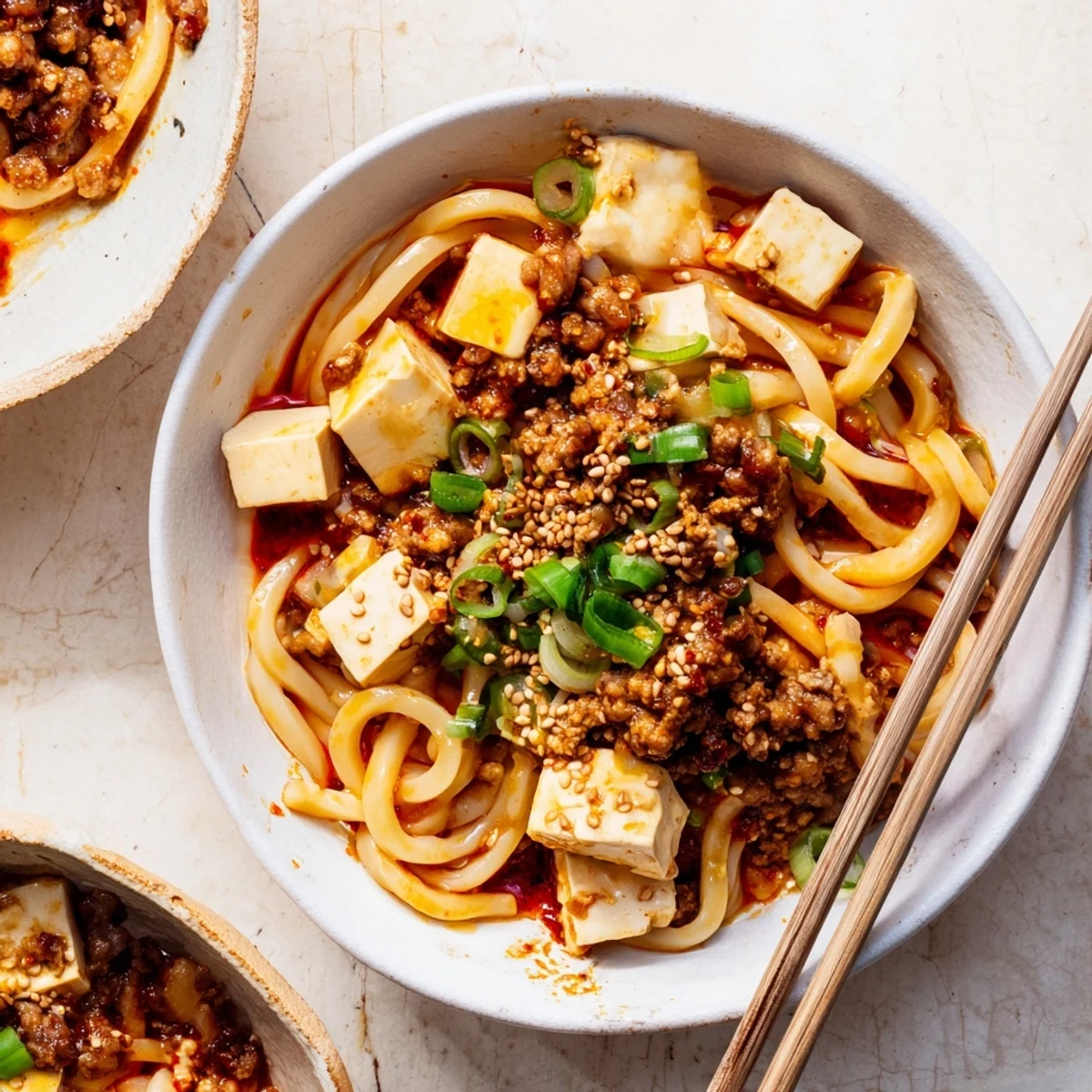
 This fusion bowl brings together the best of Chinese and Japanese comfort cooking. Soft silken tofu absorbs the bold, numbing spice of Sichuan peppercorns and fermented chili bean paste, while thick udon noodles provide satisfying chew. The dish comes together in just over half an hour, making it perfect for weeknight dinners when you crave something deeply flavorful and warming.
Ground pork adds savory depth, though plant-based mince works beautifully for a vegetarian version. The sauce thickens naturally as it simmers, coating every strand of udon and tofu cube in glossy, spicy richness. Finished with fresh green onions, toasted sesame seeds, and optional chili oil, each bowl delivers layers of texture and heat.
The first time I saw mapo tofu paired with udon noodles, I'll admit I was skeptical. Something about the chewy, springy texture of thick Japanese noodles tangled with that silky, numbing Sichuan sauce just clicked in my brain. Now whenever winter winds howl against my windows, this is the bowl that ends up on my table, steaming and impossibly red, with that signature tingle on my lips.
Last February, during that terrible ice storm that trapped everyone inside for three days, my roommate and I made this recipe four times. We ate it huddled under blankets, watching snow pile up past the windows, steam fogging up our glasses. Something about that combination of warming spice and comforting carbs just made everything feel okay.
Ingredients
- Soft tofu: I've learned through many crumbled disasters that you want to handle this gently, cubing it right before you need it so it keeps its shape
- Ground pork or plant-based mince: This creates those savory little crumbles that make each bite interesting, and it carries the spicy sauce beautifully
- Fresh udon noodles: These thick, chewy noodles are the whole reason this fusion works so well, their springy texture standing up to the bold sauce
- Sichuan peppercorns: Toasting these in oil first releases their floral, numbing essence, which is the soul of authentic mapo flavor
- Doubanjiang: This fermented chili bean paste is absolutely non-negotiable, it's what gives the sauce that deep red color and complex fermented depth
- Cornstarch slurry: This is what transforms the broth into that glossy, restaurant-style coating that clings to every noodle
Instructions
- Get your mise en place ready:
- Before you turn on any heat, cube your tofu carefully, mince your aromatics, and get that water boiling for noodles. Once the cooking starts, everything moves fast.
- Toast the Sichuan peppercorns:
- Heat your oil in a large skillet or wok over medium heat, add the crushed peppercorns, and let them sizzle for about 30 seconds until the air becomes fragrant and you start to sneeze.
- Build your aromatic base:
- Fish out the peppercorns if you prefer, then add garlic, ginger, and the white parts of your spring onions. Let them soften and perfume the oil for about a minute.
- Brown your protein:
- Crank the heat to medium-high and add your ground pork or plant-based mince. Use your spatula to break it into small, even crumbles, letting it develop some golden color.
- Wake up the doubanjiang:
- Stir in that chili bean paste and let it cook for 1 to 2 minutes. You'll know it's ready when the oil turns a brilliant red and the kitchen smells absolutely incredible.
- Add your sauces and seasonings:
- Pour in the soy sauce, oyster sauce, Shaoxing wine, and sugar. Let everything bubble together, scraping up any flavorful bits stuck to the bottom of the pan.
- Gently incorporate the tofu:
- Carefully fold in those tender cubes and pour in your broth. Let it simmer for about 5 minutes, spooning that developing sauce over the tofu occasionally so it absorbs flavor.
- Thicken to glossy perfection:
- Stir in your cornstarch slurry and watch the sauce transform into something thick and velvety. Another 2 to 3 minutes of simmering will give you that restaurant texture.
- Cook your udon:
- While the mapo tofu bubbles away, drop your fresh udon noodles into boiling water. They usually only need 2 to 3 minutes, so stay close and taste frequently.
- Bring it all together:
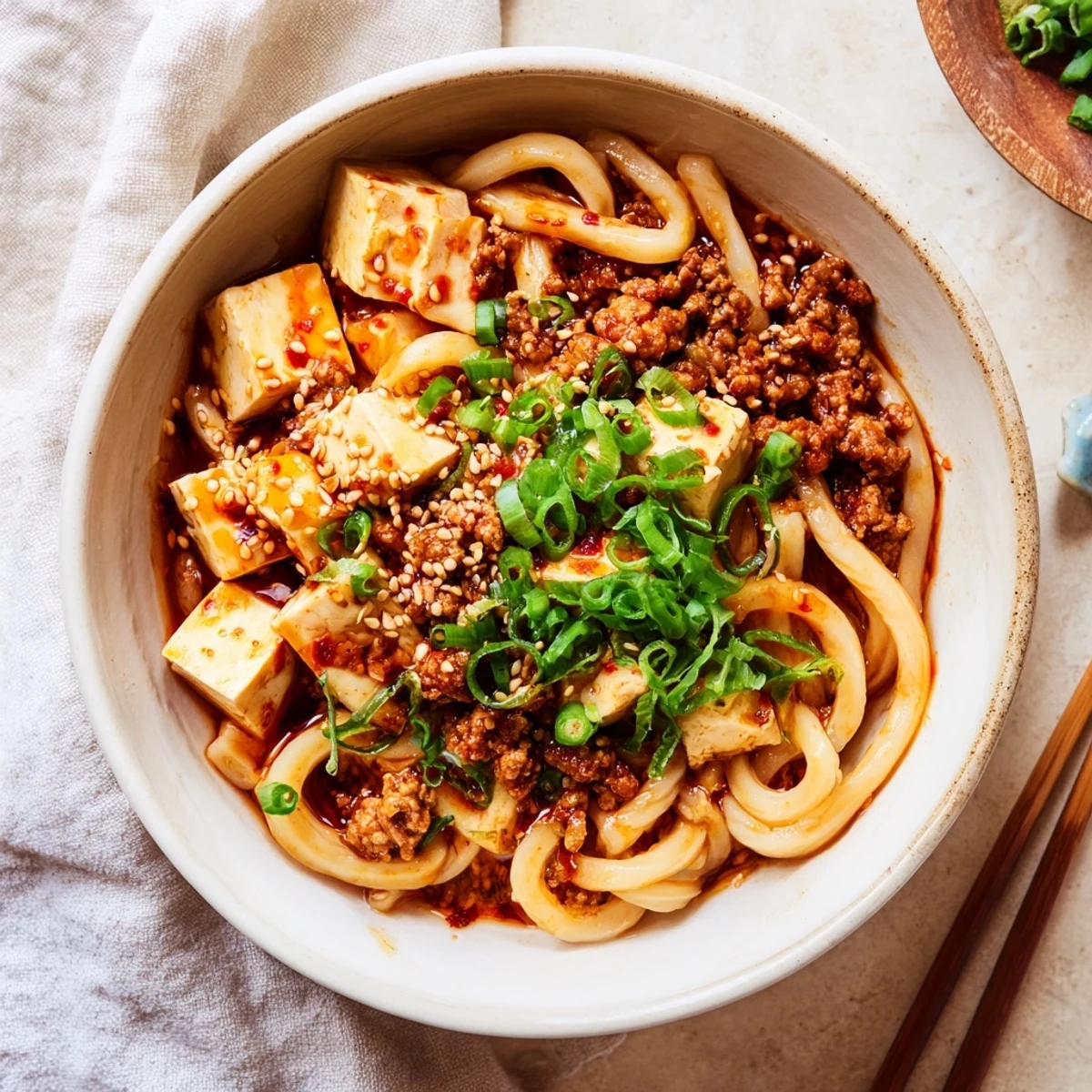
- Drain those noodles and divide them among four waiting bowls. Ladle generous portions of that spicy, silky mapo tofu over each portion and finish with the green parts of your onions, sesame seeds, and chili oil.
 Pin It
 My friend Mei took one bite of this during a dinner party and immediately demanded the recipe. She called me two days later to say she'd made it three times that week, and that her husband, who claims to hate tofu, had gone back for seconds every single night.
Making It Your Own
I've discovered that adding a handful of fresh spinach or bok choy during the last minute of simmering gives you some color and makes the whole thing feel slightly less indulgent, though honestly, comfort food like this deserves to be unapologetic.
The Vegetarian Switch
When I make this for my plant-based friends, I use a Beyond Meat or Impossible product in place of pork, and swap mushroom sauce for the oyster sauce. The result is so satisfying that even the carnivores at the table don't complain.
Serving Suggestions
A cold beer or crisp sake cuts through the heat beautifully, and something about a simple cucumber salad on the side makes this feel like a complete meal. I also like to put extra chili oil on the table and let everyone adjust their own heat level.
- Double the doubanjiang if you really love that fermented chili kick
- Reserve some pasta water in case your sauce gets too thick
- Fresh chopped cilantro makes a beautiful addition to the garnish
 Pin It
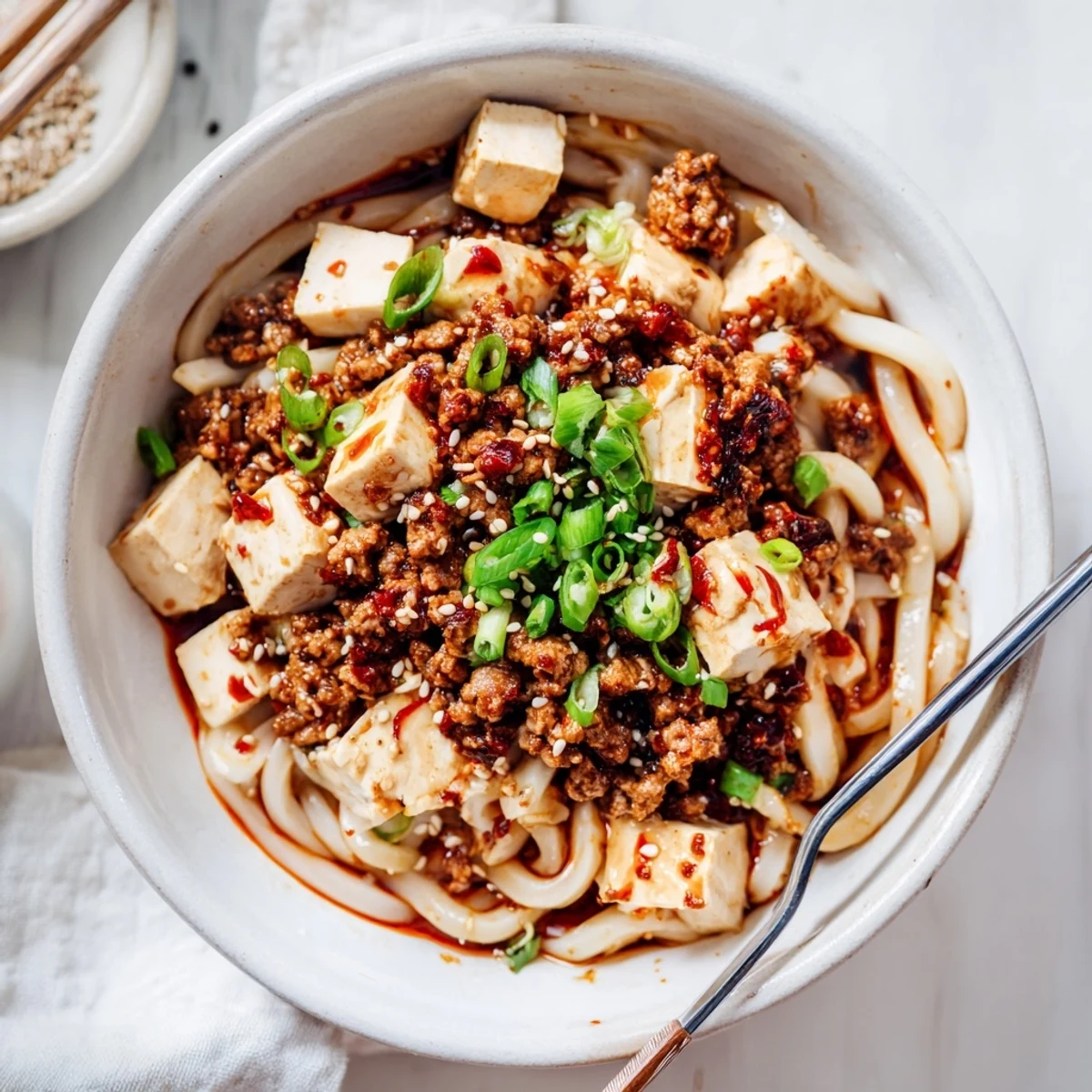
 There's something deeply comforting about a bowl of noodles that makes your lips tingle and your forehead break into a gentle sweat. This recipe has saved many a gray evening in my house.
Common Questions
- → What makes mapo tofu authentic?
-
Authentic mapo tofu features doubanjiang fermented bean paste, Sichuan peppercorns for that characteristic numbing sensation, and soft tofu that gently absorbs the spicy sauce. The balance between heat, numbing spice, and savory richness defines this classic Sichuan preparation.
- → Can I make this vegetarian?
-
Absolutely. Substitute ground pork with plant-based mince and swap oyster sauce for mushroom sauce. The result is just as satisfying, with the tofu and sauce providing plenty of protein and umami flavor.
- → How spicy is this dish?
-
The spice level is medium to high, depending on how much doubanjiang you use. You can control the heat by adjusting the fermented bean paste and adding chili oil only if you want extra kick. The Sichuan peppercorns provide a unique numbing sensation rather than pure burn.
- → What type of tofu works best?
-
Soft or silken tofu is traditional for mapo because its delicate texture absorbs the sauce beautifully. Firm tofu can be used but won't have the same melting quality. Handle gently when stirring to prevent breaking the cubes.
- → Can I use dried udon noodles?
-
Fresh udon noodles are ideal for their chewy texture, but dried udon works in a pinch. Cook according to package instructions and avoid overcooking—al dente noodles hold up better when tossed with the thick sauce.