
 Pin It
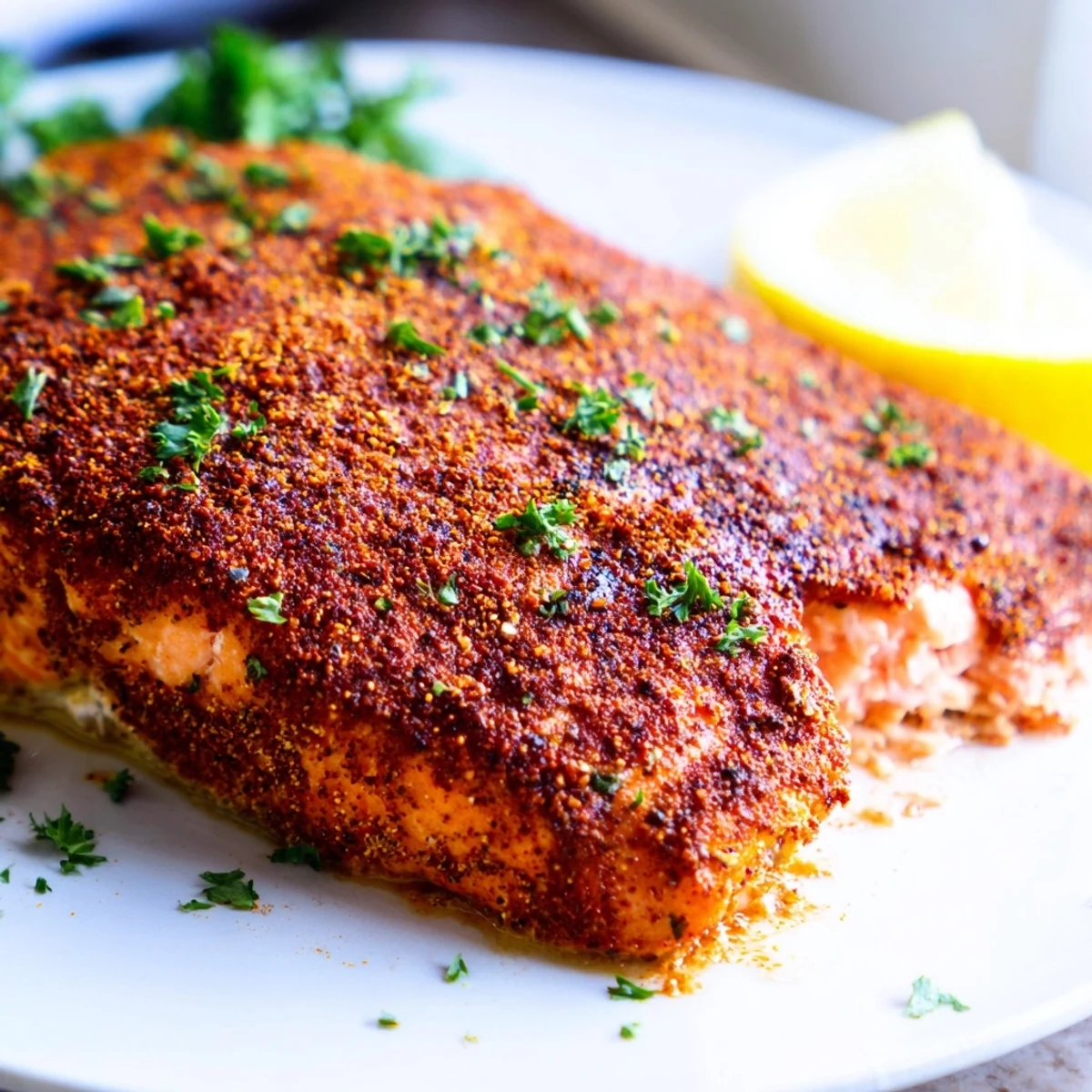
 This oven baked Cajun salmon brings bold, smoky flavors to your dinner table in just 25 minutes. Four salmon fillets are generously coated with a homemade blend of Cajun seasoning, smoked paprika, garlic, and onion powder, then baked until perfectly flaky.
At only 320 calories per serving with 32g of protein, it's a nutritious option that doesn't sacrifice flavor. Serve alongside roasted vegetables, fluffy rice, or a crisp salad for a complete meal.
The sizzle of Cajun spice hitting a hot baking sheet is one of those kitchen sounds that instantly makes everyone wander in and ask what smells so good. My neighbor once knocked on my door holding an empty plate, hoping I had made this salmon again after catching a whiff through the hallway. It is bold, messy in the best way, and takes almost no effort to pull off on a random Tuesday.
I served this to my sister the night she moved into her first apartment, standing in a kitchen still full of unpacked boxes and using a borrowed baking sheet. We ate straight off the pan with forks because the plates were somewhere in a box labeled kitchen stuff, probably. She called me a week later to say she had already made it three times.
Ingredients
- 4 salmon fillets (150 to 180 g each): Skin on or off works here, though skin on holds together beautifully during baking and crisps up underneath.
- Olive oil: Two tablespoons is all you need to bind the spices and keep the fish incredibly moist.
- Cajun seasoning: A tablespoon of store bought saves time, but a homemade blend lets you control the salt and heat.
- Smoked paprika: This adds a subtle smokiness that makes the dish taste like it came off a grill.
- Salt and black pepper: Half a teaspoon of salt and a quarter teaspoon of pepper balance the bold spices perfectly.
- Garlic powder and onion powder: A quarter teaspoon of each rounds out the savory depth without overpowering the fish.
- Cayenne pepper: Optional but a quarter teaspoon gives a gentle warmth that builds with each bite.
- Fresh parsley or cilantro: Two tablespoons chopped brings a bright, fresh finish that cuts through the richness.
- Lemon wedges: One lemon, cut into wedges, because a squeeze of acid at the end ties everything together.
Instructions
- Preheat and prepare:
- Set your oven to 200 degrees C (400 degrees F) and line a baking sheet with parchment paper or foil for effortless cleanup.
- Mix the Cajun paste:
- In a small bowl, stir together the olive oil, Cajun seasoning, smoked paprika, salt, pepper, garlic powder, onion powder, and cayenne until it forms a fragrant, rust colored paste.
- Dry the salmon:
- Pat each fillet thoroughly with paper towels because dry fish means the spice blend adheres properly and you get a better bake.
- Coat every fillet:
- Place the salmon skin side down on the baking sheet and brush the spice mixture generously over the top and sides, letting it pool slightly on the edges.
- Bake until flaky:
- Slide the pan into the oven for 12 to 15 minutes, checking at the 12 minute mark by gently pressing a fork into the thickest part to see if it flakes.
- Finish and serve:
- Pull the salmon out, scatter chopped parsley or cilantro over the top, and serve with lemon wedges pressed alongside.
 Pin It
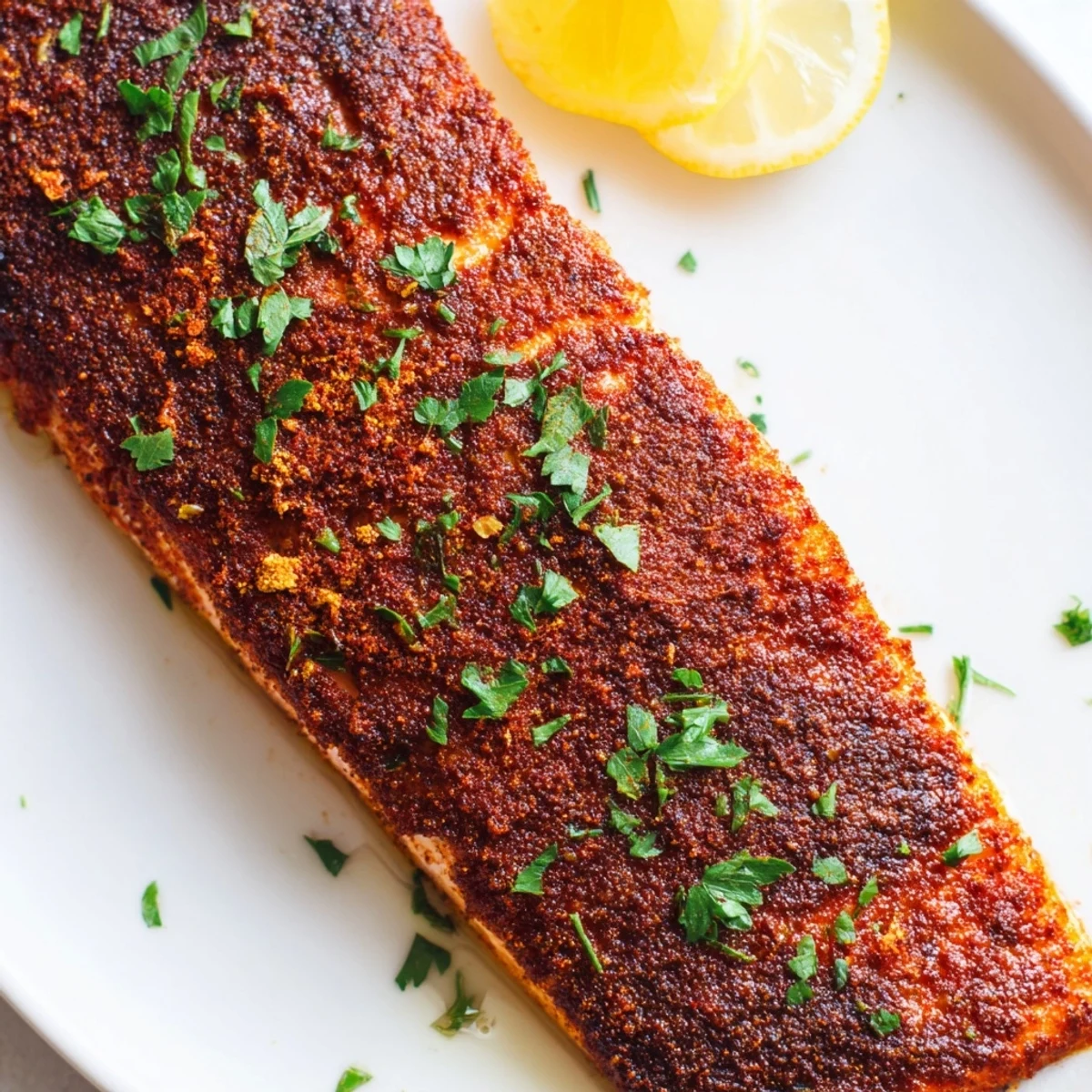
 There is something about pulling a golden, spice crusted fillet from the oven that makes a plain weeknight suddenly feel a little celebratory, even if you are eating standing at the counter.
What to Serve Alongside
Roasted vegetables are my default pairing because they can share the same baking sheet and soak up any leftover spices. A bed of white rice or quinoa works beautifully if you want something to soak up the juices. A crisp green salad with a tangy vinaigrette cuts through the richness and balances the heat in the best way.
Storing and Reheating
Leftover salmon keeps well in an airtight container in the fridge for up to two days, though it rarely lasts that long in my house. Reheat it gently in a low oven or eat it cold flaked over a salad the next day, which might actually be my favorite way to enjoy it.
A Few Final Thoughts
This recipe forgives almost everything except overcooking, so keep a close eye on the clock and trust your fork over the timer. Here are a few last things worth remembering before you start.
- If you want extra moisture, lay a few thin lemon slices directly on top of the fillets before baking.
- A pastry brush gets the spice paste distributed more evenly than a spoon ever will.
- Let the salmon rest for two minutes after baking so the juices redistribute instead of running onto the plate.
 Pin It
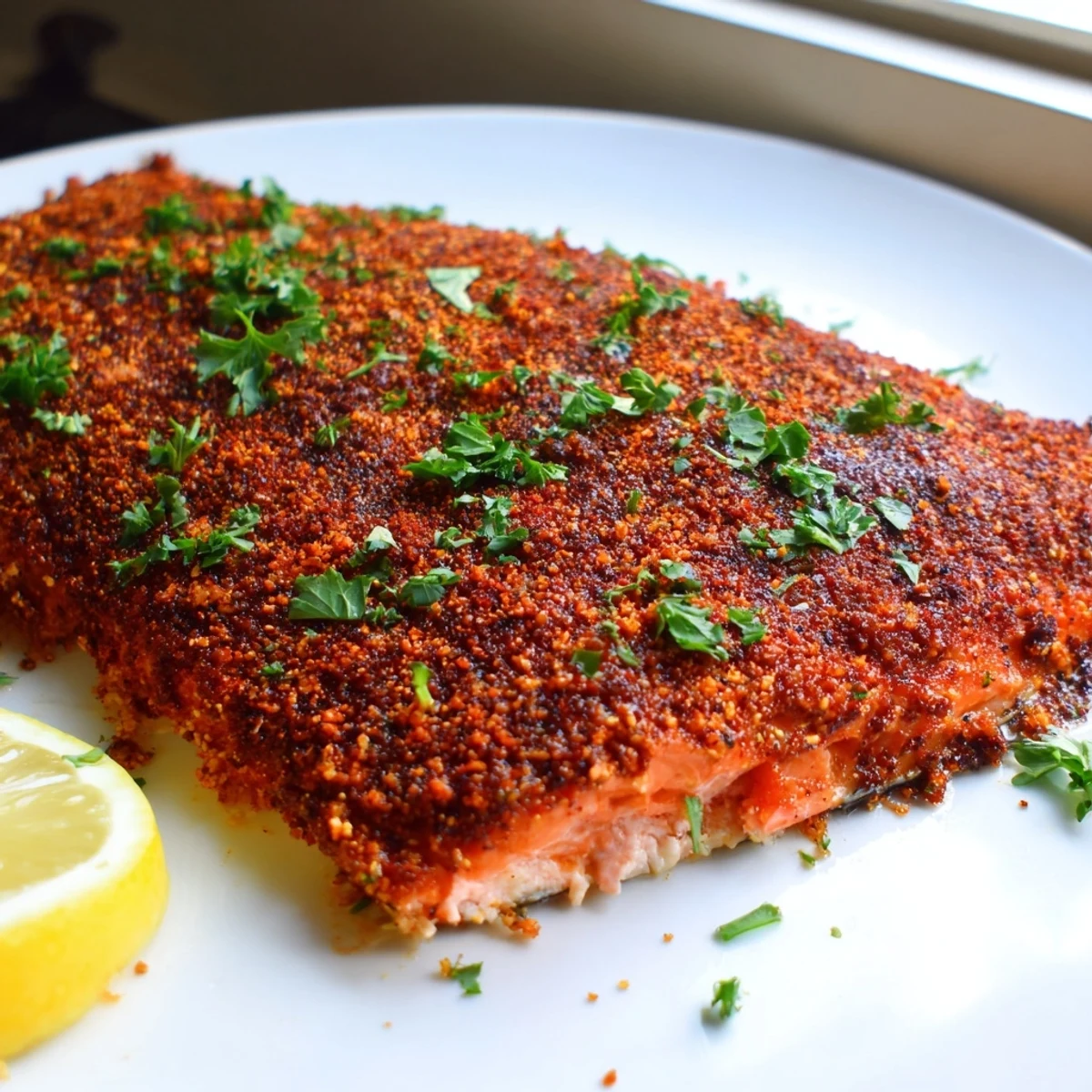
 This salmon is proof that a handful of bold spices and fifteen minutes in the oven can turn an ordinary evening into something worth savoring. Make it once and it will quietly become a staple you reach for without thinking.
Common Questions
- → What temperature should salmon be baked at?
-
Salmon bakes best at 200°C (400°F). At this temperature, it typically takes 12–15 minutes to cook through while maintaining a moist, tender interior.
- → How do I know when the salmon is fully cooked?
-
The salmon is done when it flakes easily with a fork. For precision, use a meat thermometer — the internal temperature should reach 63°C (145°F) at the thickest part of the fillet.
- → Can I use skinless salmon fillets?
-
Yes, both skin-on and skinless fillets work well. If using skin-on, place the fillets skin-side down on the baking sheet. The skin helps retain moisture and can be easily removed after baking.
- → How spicy is this Cajun salmon?
-
The heat level is customizable. The Cajun seasoning provides moderate warmth, while the optional cayenne pepper lets you dial it up. Omit the cayenne entirely for a milder version that still packs plenty of flavor.
- → What sides pair well with Cajun salmon?
-
Roasted vegetables like asparagus or broccoli complement the spices beautifully. Steamed rice, quinoa, or a fresh green salad with lemon vinaigrette also make excellent companions.
- → Can I prepare the Cajun spice blend ahead of time?
-
Absolutely. Mix the dry spices in larger batches and store in an airtight container for up to 3 months. This makes weeknight meal prep even faster — just whisk with olive oil when ready to use.