
 Pin It
 Master the art of making authentic Japanese takoyaki with this foolproof guide. These savory, golden-brown balls feature a delicate batter filled with tender octopus pieces, crunchy tenkasu, zesty pickled ginger, and fresh green onions. The process involves pouring batter into a special molded pan, adding fillings, and skillfully turning each sphere until perfectly crisp on all sides. Finished with sweet-savory takoyaki sauce, creamy Japanese mayonnaise, aonori seaweed, and dancing bonito flakes.
The first time I tried making takoyaki was after a late night out in Osaka, where street vendors flipped these golden spheres with impossible speed. I burned my first batch completely, but that smoky failure taught me more than any recipe could have. Now my tiny apartment fills with the same ocean aroma that drew me in that night, and I finally understand why people queue up for these bites.
My friend Yuki visited last winter and we spent an entire afternoon huddled over my takoyaki pan, laughing at our lopsided early attempts. She taught me that the secret isnt perfect technique but rather the courage to keep flipping even when everything looks messy. Now whenever I make these, I remember steam fogging up her glasses and the way she insisted burnt edges were just extra flavor.
Ingredients
- All-purpose flour: Creates the structure that holds everything together, but sift it first to avoid lumps
- Large eggs: Room temperature eggs incorporate better into the batter for that silky texture
- Dashi stock: The foundation of umami, though I started with water plus soy sauce before graduating to proper dashi
- Soy sauce: Just a half teaspoon deepens the savory notes without overpowering delicate flavors
- Salt: Enhances natural sweetness of the octopus and balances the tangy toppings
- Cooked octopus: Look for pieces that still have some spring when you press them
- Tenkasu: These crispy tempura bits create tiny air pockets that make each bite lighter
- Pickled ginger: Adds bright acidity that cuts through the rich batter
- Green onions: Fresh brings necessary brightness to contrast the cooked elements
- Takoyaki sauce: Store bought is fine, but mixing Worcestershire and ketchup works in a pinch
- Japanese mayonnaise: The creamy tang balances the salty bonito flakes perfectly
- Aonori: Dont skip this dried seaweed, it adds essential earthy depth
- Bonito flakes: Theyll dance from the heat, which my nephew still finds fascinating
Instructions
- Mix the batter:
- Whisk flour, eggs, dashi, soy sauce, and salt until completely smooth, then let it rest while you prep everything else
- Heat your pan:
- Get the takoyaki pan nice and hot over medium heat, then brush each well with oil until it shimmers
- Pour and fill:
- Carefully fill each well to the brim with batter, working quickly so they cook evenly
- Add the fillings:
- Drop one piece of octopus into each well along with small pinches of tenkasu, ginger, and green onion
- Wait for the edges:
- Let them cook undisturbed for 1 to 2 minutes until you see the edges turning golden and firm
- The first turn:
- Use skewers or chopsticks to flip each ball 90 degrees, letting the uncooked batter spill out and form the next section
- Keep turning:
- Continue flipping every minute or so, working quickly and fearlessly until all sides are deeply golden
- Plate and top:
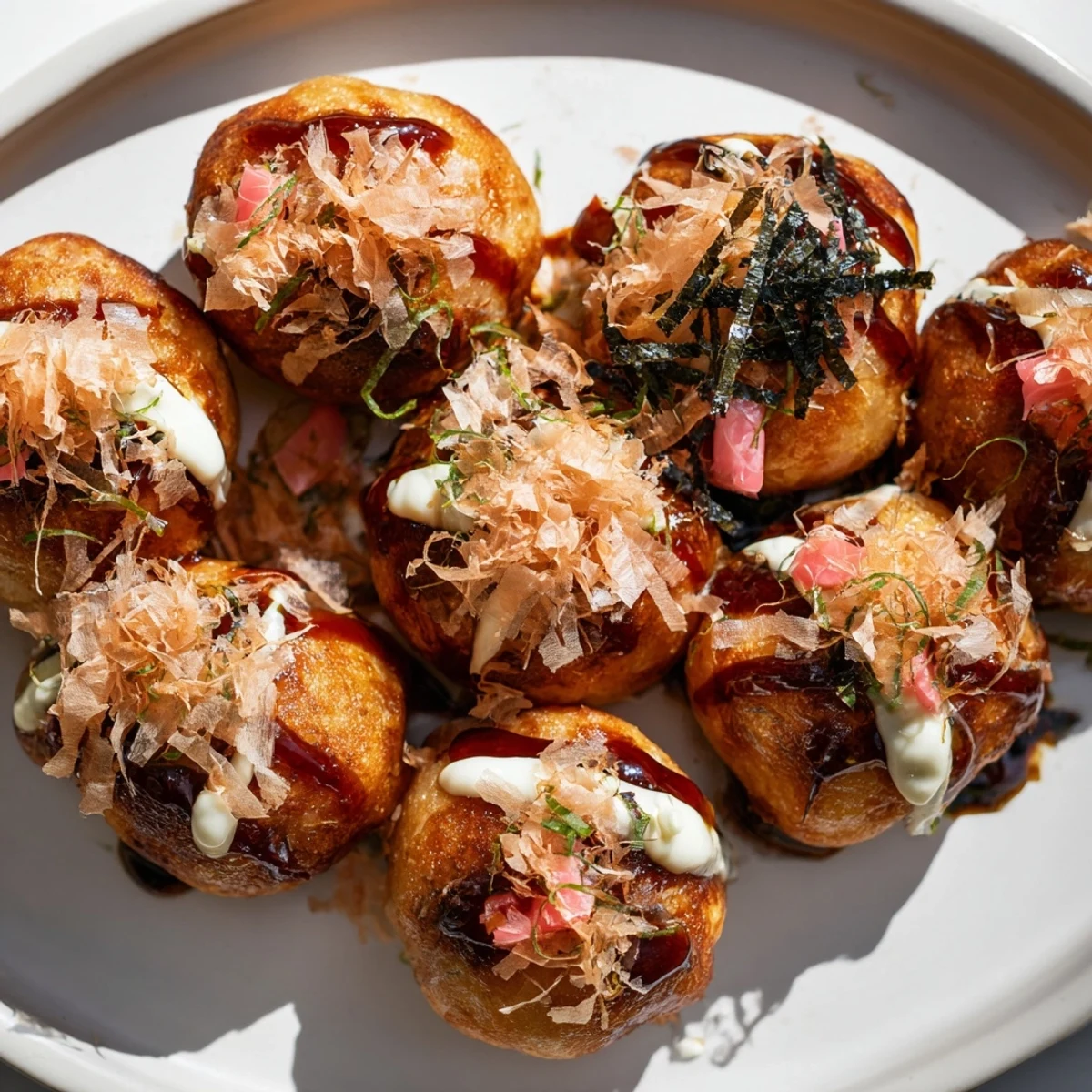
- Transfer them to a plate while still piping hot, then drizzle generously with sauce and mayo, finishing with seaweed and dancing bonito flakes
 Pin It
 Last summer my neighbors daughter watched me make these and asked if I was making magic balls. When the bonito flakes started wriggling from the heat, her eyes went huge. Now she knocks on my door whenever she smells dashi simmering.
Getting That Perfect Shape
The turning motion terrified me at first, but I learned its more about confidence than precision. Push down firmly but gently against the edge of each well, using the cooked portion as leverage. My breakthrough came when I stopped trying to make them perfectly round and focused instead on getting all sides golden.
Make It Your Way
While traditional octopus is wonderful, Ive found that cubed shrimp works beautifully for seafood lovers. For my vegetarian friends, small pieces of king oyster mushroom give a surprisingly similar chewiness. The key is keeping your filling pieces uniform in size so they cook through evenly.
Serving Strategy
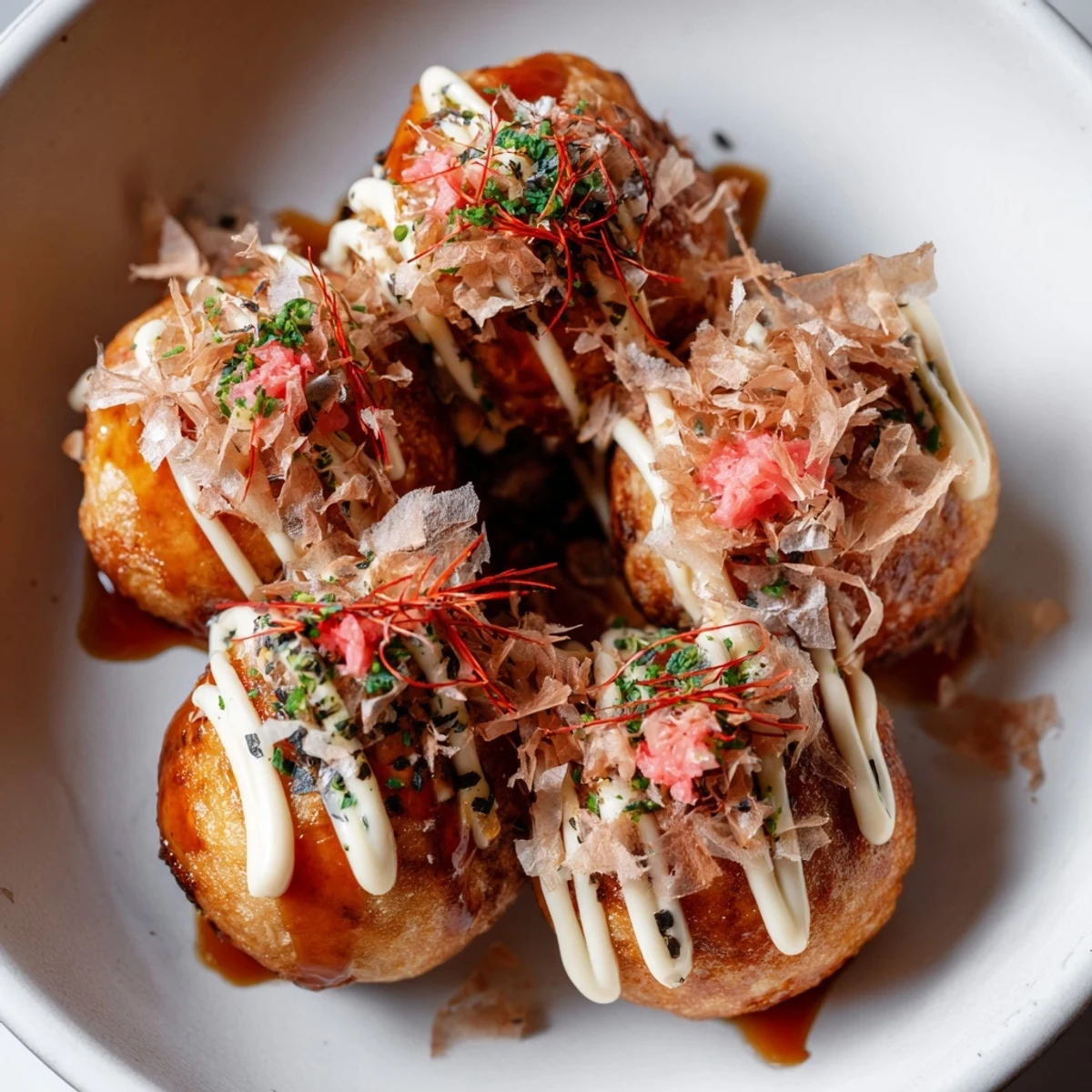
Takoyaki wait for no one, so have all your toppings open and ready before you start cooking. I set up a little station with sauce, mayo, and garnishes so I can top each batch immediately.
- Keep extra napkins nearby because eating these is gloriously messy
- Small bamboo picks are easier than forks for popping hot balls into your mouth
- They reheat surprisingly well in a hot oven if you have leftovers
 Pin It
 Theres something deeply satisfying about transforming simple ingredients into something so playful and delicious. Hope these bring as much joy to your table as they have to mine.
Common Questions
- → What makes takoyaki authentic?
-
Authentic takoyaki uses dashi-based batter, fresh octopus pieces, tenkasu for crunch, pickled ginger for brightness, and traditional toppings including takoyaki sauce, Japanese mayonnaise, aonori, and bonito flakes that dance from the heat.
- → Can I make takoyaki without a special pan?
-
While a traditional takoyaki pan yields the best results, you can substitute with an aebleskiver pan or cake pop maker. These alternatives create similar round shapes, though the size and texture may vary slightly from the classic version.
- → What can I substitute for octopus?
-
Cooked shrimp, squid, or even firm mushrooms work well as alternatives. For vegetarian versions, use diced shiitake mushrooms or extra vegetables. The key is choosing ingredients that hold their shape during cooking and provide texture contrast.
- → How do I achieve the perfect round shape?
-
Pour batter to fill each well completely, add fillings, and wait until edges begin setting before the first turn. Rotate each ball 90 degrees every 1-2 minutes using skewers or chopsticks, allowing uncooked batter to flow out and form the sphere gradually.
- → Why is dashi stock important in the batter?
-
Dashi provides the essential umami foundation that defines authentic Japanese flavor. If unavailable, substitute with water mixed with a small amount of soy sauce or fish sauce to achieve that savory depth that balances the rich toppings.
- → Should takoyaki be served immediately?
-
Yes, takoyaki are best enjoyed hot and fresh from the pan when the exterior is crisp and the interior remains creamy and soft. As they cool, they lose their signature texture contrast, though they can be briefly reheated in an oven.